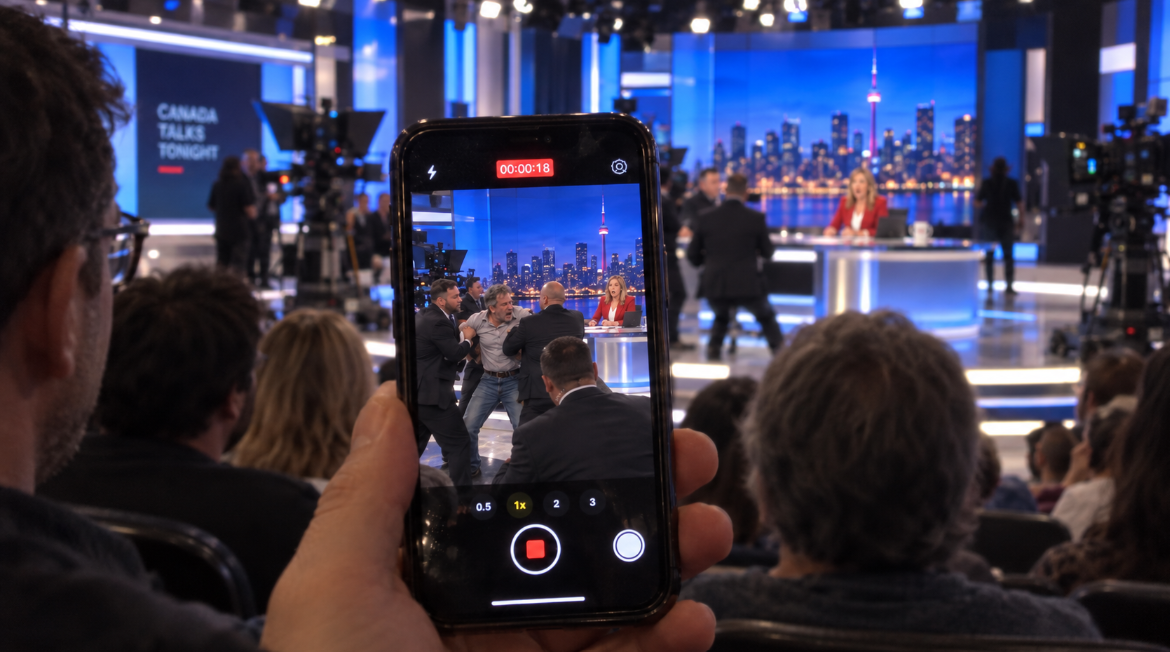
Live studio production is often discussed only when something unusual happens, but the daily reality is mostly careful preparation. Crews arrange cameras to protect sightlines, lighting teams maintain even exposure across multiple positions, and producers keep a detailed rundown that aligns timing, speaking order and on-screen graphics.
That technical foundation affects what viewers understand. A well-positioned wide shot clarifies who is present. A smooth handoff between close-ups and broader frames helps preserve continuity. Clear labeling tells the audience whether a picture is supplied, illustrative or independently reported. These details do not remove uncertainty, but they reduce confusion and support trust.
Visible action, invisible systems
Many visible moments in a studio depend on systems the audience never sees: intercom communication, return video, microphone routing, teleprompter updates and cueing from the floor. When those systems work well, viewers mainly notice clarity. When they fail or when something unexpected interrupts the plan, the hidden structure of production becomes more visible.
Why context remains essential
A supplied image or a short recording may show a striking scene, but responsible writing avoids claiming more than the frame can prove. Time, source, editorial purpose and surrounding events all matter. The goal of this publication is not to flatten images into certainty. It is to pair them with careful explanation so readers can separate observation from inference.
What readers should take away
Good media interpretation starts with ordinary questions: what exactly is seen, what is assumed, who published the material and what supporting information is available? Those questions are useful whether the subject is studio craft, a viral clip or a behind-the-scenes photograph.